- 0086(21)62671680
- 62671061
- sales@hyssgroup.com
- Language
EN 10216-2 Seamless Pressure Tubes: P235GH, P265GH, 16Mo3, 13CrMo4-5 and 10CrMo9-10
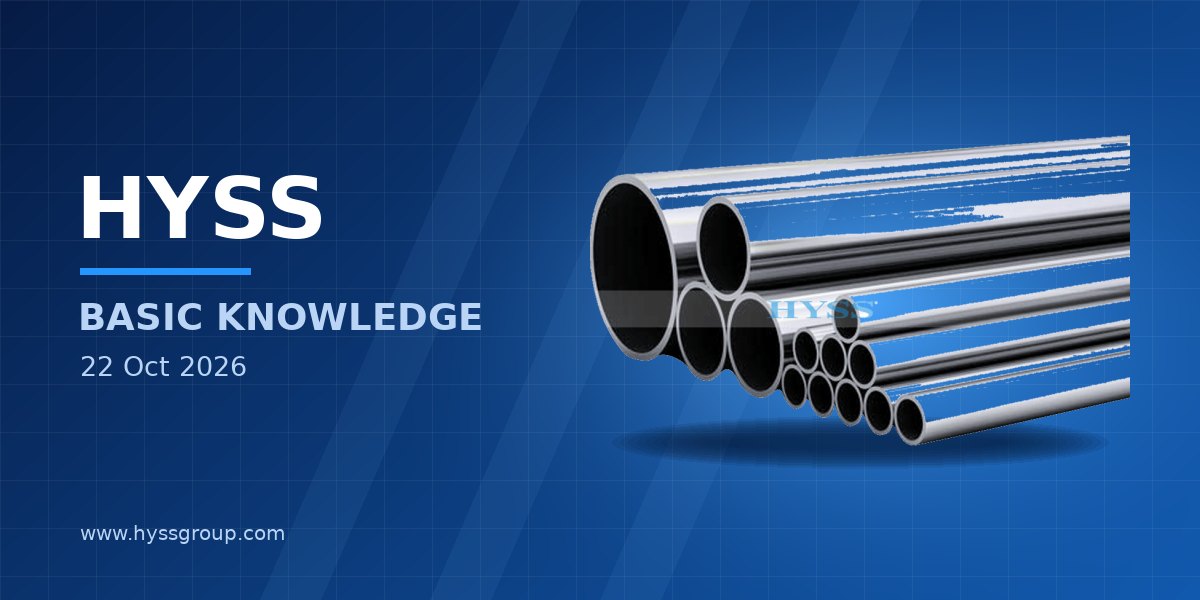
EN 10216-2 is the part of the EN 10216 series that deals with seamless tubes of non-alloy and alloy steels with specified elevated-temperature properties. It is used for boilers, superheaters, heat exchangers, process piping and pressure equipment. The tubes are normally supplied to the European Pressure Equipment Directive framework, so the standard is often paired with EN 13480 (industrial piping) or EN 12952 (water-tube boilers) in design work.
The grade names tell you how each steel is classified. The letter P stands for pressure purposes, the number gives the specified minimum yield strength in the old system, and GH means elevated-temperature use. Names such as 16Mo3, 13CrMo4-5 and 10CrMo9-10 follow the alloy-steel naming rules of EN 10027-1, where the figures relate to carbon content and alloy content.
Equivalents are only a guide. Chemistry limits, heat treatment and testing rules differ, so never treat two grades as interchangeable without checking both standards and, where applicable, the design code.
| EN 10216-2 grade | Nearest ASTM/ASME seamless grade | Other reference |
|---|---|---|
| P235GH | ASTM A106 Grade B or ASTM A192 (not identical) | DIN 17175 St 35.8 (withdrawn) |
| P265GH | ASTM A106 Grade B (approximate) | DIN 17175 St 45.8 (withdrawn) |
| 16Mo3 | ASTM A335 P1 | GOST 20072 is a different system |
| 13CrMo4-5 | ASTM A335 P11 or P12 | DIN 17175 13CrMo44 (withdrawn) |
| 10CrMo9-10 | ASTM A335 P22 | DIN 17175 10CrMo910 (withdrawn) |
For ferritic alloy pipe in ASME projects, the ASME Section II counterpart of ASTM A335 is SA-335. The related Australian reference for pressure piping is AS 4041, which sets design requirements rather than replacing the material standard.
The chemical composition limits, mechanical properties at room and elevated temperature, and permitted delivery conditions are listed in the material tables of EN 10216-2 itself. Because values vary between editions, always take them from the edition named in your purchase order. Also read:
EN 10204 type 3.1 certificates are the usual minimum for pressure service, with type 3.2 used where a third party or purchaser's inspector must countersign. Cast number, heat treatment, dimensions and test results should be traceable to the marking on the tubes. Dimensional tolerances are in EN 10216-2, while preferred outside diameters and wall thicknesses are found in ISO 1127 and EN 10220.
Chromium-molybdenum grades need controlled preheat, matching filler metals and post-weld heat treatment. The requirements depend on wall thickness and design code, so follow the approved welding procedure per EN ISO 15614-1 or ASME Section IX. Carbon steel grades are more forgiving but still require qualified procedures for pressure work.
Related products: Steel pipes & tubes
THE MEMBERS OF HYSS GROUP
1.Zhejiang Hyss Corp.
2.Zhejiang Hyss pipeline Industry Corp.
3.Hyss International Trading (Shanghai) Co., Ltd.
4.Hyss International Limited.
5.Hyss International Logistics(Shanghai)Co.,Ltd.
6.Hebei Hyss Corp.
SALES CENTER OF HYSS GROUP
Add:Room 1507,No.1 Building,GuoSon Center,No.388
Zhongjiang Road,Shanghai,China
Postal Code:200062
Tel: 0086(21)62671680 / 62671061
Fax:0086(21)62671932
 The function is under construction, so stay tuned!
 la fonction est en construction, alors restez branchés!
 La función está en construcción, así que ¡mantente atento!
 A função está EM construção, então fiquem ligados!
 функция находится в стадии строительства, так что оставайтесь на связи!


